Want to unlock the true power of Azure without blowing your budget? The secret lies in mastering the Azure Price Cal — your ultimate weapon for predicting, analyzing, and slashing cloud expenses. Let’s dive into how you can take control today.



What Is Azure Price Cal and Why It Matters

The term ‘Azure Price Cal’ isn’t an official Microsoft product name, but rather a widely used shorthand for tools and methods that help users calculate, estimate, and manage costs on Microsoft Azure. Whether you’re a startup founder, a DevOps engineer, or a CFO, understanding how to forecast your cloud spending is critical to avoiding surprise bills and optimizing ROI.
At its core, Azure Price Cal refers to the ecosystem of pricing calculators, cost management dashboards, and third-party tools designed to give you full visibility into your Azure expenditure. These tools allow you to simulate deployments, compare pricing models, and identify cost-saving opportunities before you commit resources.
Understanding the Azure Pricing Model
Microsoft Azure operates on a pay-as-you-go pricing model, meaning you only pay for what you use. However, this flexibility comes with complexity. Services like virtual machines, storage, networking, and AI tools all have different pricing structures based on region, usage duration, and performance tiers.
For example, a Virtual Machine (VM) can cost anywhere from $0.004/hour for a basic B1s instance to over $10/hour for a high-performance GPU-enabled NC series. Without a proper Azure Price Cal strategy, it’s easy to underestimate long-term costs.
- Compute resources are billed per second or per hour.
- Storage costs vary by redundancy type (LRS, ZRS, GRS).
- Data transfer fees apply for outbound traffic across regions.
Understanding these variables is the first step toward accurate cost forecasting.
The Role of Azure Pricing Calculator
The official Azure Pricing Calculator is the cornerstone of any Azure Price Cal strategy. This free, web-based tool allows you to build a virtual architecture by selecting services, configuring specs, and setting usage estimates.
You can simulate everything from a simple web app using App Service and SQL Database to a full-scale enterprise deployment with Azure Kubernetes Service (AKS), Cosmos DB, and Azure Active Directory. The calculator instantly updates your estimated monthly cost, helping you make informed decisions before deployment.
“The Azure Pricing Calculator saved us over $40,000 in the first quarter alone by identifying over-provisioned VMs and suggesting reserved instances.” — Cloud Architect, TechScale Inc.
It also supports exporting your estimates to PDF or CSV, making it easy to share with stakeholders or include in budget proposals.
How to Use Azure Price Cal for Accurate Cost Forecasting
Accurate cost forecasting isn’t just about plugging numbers into a tool — it’s about understanding your workload patterns, growth projections, and optimization levers. The Azure Price Cal process involves several key steps to ensure your estimates reflect real-world usage.
Whether you’re planning a migration, launching a new product, or scaling an existing application, a structured approach to cost estimation will prevent financial surprises and support strategic decision-making.
Step 1: Define Your Workload Architecture
Start by mapping out your intended Azure environment. Identify the core services you’ll use — such as VMs, Blob Storage, Azure Functions, or Azure Synapse Analytics. For each component, note down:
- Instance type or service tier
- Expected usage duration (hours/month)
- Data storage volume (GB/TB)
- Network egress (data transfer out)
- Redundancy and availability requirements
This blueprint becomes the foundation for your Azure Price Cal model. The more detailed your architecture, the more accurate your cost estimate.
Step 2: Input Realistic Usage Scenarios
One of the biggest mistakes in cost estimation is assuming peak usage 24/7. In reality, many workloads are bursty or follow predictable patterns. Use historical data or industry benchmarks to define realistic usage scenarios.
For example, a retail app might see 10x traffic during holiday seasons. By modeling baseline, peak, and average usage, you can calculate tiered cost projections and plan for auto-scaling or spot instances to reduce expenses.
The Azure Price Cal tools allow you to adjust usage sliders dynamically, helping you visualize how changes in traffic or compute demand affect your monthly bill.
Leveraging Azure Cost Management + Billing for Real-Time Insights
While the Azure Pricing Calculator is great for pre-deployment planning, Azure Cost Management + Billing is your go-to tool for post-deployment cost tracking. This integrated service provides real-time visibility into your actual spending, helping you validate your Azure Price Cal estimates and identify anomalies.
With Cost Management, you can break down expenses by resource group, subscription, department, or tag. This level of granularity is essential for organizations with multiple teams or projects running on the same Azure tenant.
Setting Up Budgets and Alerts
One of the most powerful features of Azure Cost Management is the ability to set custom budgets. You can define monthly spending limits for specific resources or teams and receive email or SMS alerts when thresholds are exceeded.
For example, you might set a $500 budget for your development environment. If costs approach $450, Azure sends a warning, allowing you to investigate and take corrective action before overspending.
- Budgets can be based on actual costs or forecasted costs.
- Alerts can be configured for daily, weekly, or monthly periods.
- You can assign alerts to specific users or groups via Azure Roles.
This proactive monitoring turns the Azure Price Cal concept from a one-time calculation into an ongoing financial management practice.
Analyzing Cost Trends and Anomalies
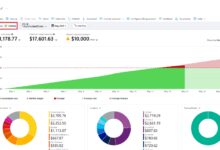
Cost Management provides detailed reports and visualizations that show how your spending evolves over time. You can spot trends like rising storage costs due to unmanaged backups or unexpected spikes in data transfer fees.
The ‘Cost Analysis’ dashboard lets you filter by service, location, or tag, making it easy to pinpoint cost drivers. For instance, you might discover that your Azure Functions are consuming more execution time than expected, prompting a code optimization or configuration review.
“We reduced our Azure bill by 32% just by analyzing cost trends and shutting down idle resources.” — DevOps Lead, CloudFlow Solutions
Regularly reviewing these insights ensures your actual costs align with your Azure Price Cal projections.
Maximizing Savings with Reserved Instances and Hybrid Benefits
One of the most effective ways to reduce Azure costs is through Reserved Virtual Machine Instances (RIs). By committing to 1-year or 3-year terms, you can save up to 72% compared to pay-as-you-go pricing. This is a key component of any mature Azure Price Cal strategy.
Reserved Instances are ideal for workloads with predictable usage patterns, such as production databases, domain controllers, or backend APIs that run continuously.
How Reserved Instances Work
When you purchase a reserved instance, Azure applies the discount automatically to matching VM usage. For example, if you reserve a D4s v3 VM in the East US region, any running D4s v3 VM in that region will consume the reservation first, reducing or eliminating the hourly charge.
The Azure Price Cal tools include a ‘Reservations’ section where you can compare pay-as-you-go vs. reserved pricing and calculate your potential savings. Microsoft even provides a ‘Reserved Instance Recommendation’ report in Cost Management, suggesting which VMs would benefit most from reservation.
- 1-year reservation: ~40-50% savings
- 3-year reservation: ~60-72% savings
- Upfront or monthly payment options available
You can also exchange or cancel reservations within a short window, offering some flexibility.
Leveraging Azure Hybrid Benefit
If your organization already owns Windows Server or SQL Server licenses with Software Assurance, you can use the Azure Hybrid Benefit to reduce costs by up to 55%. This allows you to apply your on-premises licenses to Azure VMs, avoiding additional licensing fees.
This is especially valuable for enterprises migrating legacy applications to the cloud. When factoring this into your Azure Price Cal model, you can significantly lower your estimated compute costs.
The Hybrid Benefit works with both pay-as-you-go and reserved instances, making it a flexible cost-saving option across different deployment strategies.
Third-Party Tools to Enhance Your Azure Price Cal Strategy
While Microsoft provides robust native tools, third-party solutions can offer deeper insights, multi-cloud support, and advanced automation. These tools integrate with Azure’s APIs to pull cost and usage data, then apply AI-driven analytics to recommend optimizations.
For organizations managing complex or hybrid environments, these platforms can elevate your Azure Price Cal capabilities beyond what’s possible with built-in tools alone.
Top Third-Party Azure Cost Management Tools
Several vendors specialize in cloud financial management (FinOps). Here are some of the most popular:
- CloudHealth by VMware: Offers real-time cost visibility, anomaly detection, and automated savings recommendations. Learn more.
- Azure Advisor: While technically a Microsoft tool, it’s worth mentioning as it provides personalized recommendations for cost, performance, and security.
- Spot by NetApp: Focuses on workload optimization, rightsizing, and spot instance management. Explore Spot.
- Apptio Cloudability: Provides detailed cost allocation and showback/chargeback reporting for enterprise finance teams. Visit Apptio.
These tools often include features like carbon footprint tracking, budgeting workflows, and integration with ERP systems, making them ideal for large-scale cloud operations.
Integrating with CI/CD and DevOps Pipelines
Advanced organizations are embedding cost checks directly into their development workflows. By integrating Azure Price Cal logic into CI/CD pipelines, teams can receive cost impact warnings before deploying new infrastructure.
For example, using tools like Terraform with cost estimation plugins or Azure Policy rules that block deployments exceeding a certain price threshold can prevent cost overruns at the source.
This shift-left approach to cost management ensures that financial considerations are part of the development lifecycle, not an afterthought.
Common Azure Price Cal Mistakes and How to Avoid Them
Even experienced cloud users can fall into traps when estimating Azure costs. Many of these mistakes stem from overlooking hidden fees, underestimating data transfer costs, or failing to account for long-term growth.
By recognizing these pitfalls early, you can refine your Azure Price Cal models and avoid costly surprises.
Ignoring Data Transfer and Egress Fees
One of the most common oversights is forgetting about data egress charges. While inbound data is free, outbound data (especially across regions or to the internet) can add up quickly.
For example, transferring 10 TB of data from Azure US West to a user in Europe could cost over $800/month. If your application serves global users, consider using Azure CDN to reduce egress fees.
Always include egress estimates in your Azure Price Cal model, especially for media-heavy or API-driven applications.
Over-Provisioning Resources
It’s tempting to start with high-performance VMs to ensure performance, but this often leads to wasted spending. A D8s v3 VM running at 10% CPU utilization is a clear candidate for downsizing.
Use Azure Monitor and Advisor recommendations to identify underutilized resources. Then, update your Azure Price Cal model with rightsized instances to reflect actual performance needs.
“We were paying $1,200/month for a VM that could have been a $300/month instance. Azure Price Cal helped us catch it.” — CTO, DataNova
Best Practices for Ongoing Azure Cost Optimization
Cost management isn’t a one-time task — it’s an ongoing discipline. The most successful organizations treat Azure Price Cal as a continuous process, not a checkbox.
By adopting FinOps principles and embedding cost awareness into your culture, you can achieve sustainable cloud efficiency.
Implement Tagging and Cost Allocation
Use Azure tags to label resources with metadata like ‘Project’, ‘Department’, ‘Environment’, or ‘Owner’. This allows you to filter and allocate costs accurately in Cost Management.
For example, tagging all development resources with ‘Env=Dev’ lets you generate reports showing exactly how much each team spends, enabling better budgeting and accountability.
- Enforce tagging policies using Azure Policy.
- Use tags for chargeback models in multi-department organizations.
- Automate tagging during deployment with Infrastructure-as-Code (IaC) tools.
Automate Cost-Saving Actions
Leverage Azure Automation, Logic Apps, or third-party tools to schedule shutdowns for non-production resources. For example, automatically stop dev/test VMs every night or on weekends.
You can also set up auto-scaling rules to increase capacity during peak hours and scale down during off-peak times, ensuring you only pay for what you need.
These automation strategies should be reflected in your Azure Price Cal models to show long-term savings potential.
What is the Azure Price Cal?
The term ‘Azure Price Cal’ refers to the tools and practices used to estimate, analyze, and manage Microsoft Azure cloud costs. This includes the official Azure Pricing Calculator, Cost Management + Billing, and third-party FinOps platforms.
How accurate is the Azure Pricing Calculator?
The Azure Pricing Calculator is highly accurate for known configurations and usage patterns. However, real-world variables like traffic spikes, data egress, and underutilized resources can cause deviations. It’s best used as a starting point, supplemented with ongoing monitoring.
Can I save money with Azure Reserved Instances?
Yes. Azure Reserved Instances can save up to 72% on VM costs for workloads with predictable usage. They are ideal for production environments running 24/7 and can be combined with the Azure Hybrid Benefit for additional savings.
What are hidden costs in Azure?
Common hidden costs include data egress fees, public IP address charges, DNS queries, and cross-region replication. Always include these in your Azure Price Cal model to avoid surprise bills.
How do I monitor my Azure spending in real time?
Use Azure Cost Management + Billing to monitor spending in real time. Set up budgets, alerts, and cost analysis reports to track usage by resource, team, or project.
Mastering the Azure Price Cal is no longer optional — it’s a strategic necessity. From initial cost estimation using the Azure Pricing Calculator to ongoing optimization with Cost Management and third-party tools, every step you take toward financial visibility pays off. By avoiding common pitfalls, leveraging reservations, and embedding cost awareness into your workflows, you can harness the full power of Azure without the financial risk. Start refining your Azure Price Cal strategy today and turn cloud spending from a cost center into a competitive advantage.
Recommended for you 👇
Further Reading: